A few years ago, if you ran a small bakery, a local clinic or a three-person consulting firm, "AI on your website" sounded like something only big tech companies could afford. You'd need data scientists, developers, months of testing and a budget that made your accountant wince.
That picture has changed quickly. Today, a plumber's website can answer customer questions at midnight, a boutique store can recommend products based on browsing habits, and a small law firm can book consultations automatically. A big reason is something that rarely gets talked about outside agency circles: white label web development.
Let's unpack what it is, why it matters, and how it is quietly levelling the playing field.
The AI Gap Small Businesses Feel Every Day
Most small business owners aren't against technology. They're just stretched. You're handling sales, customer service, invoices and the occasional crisis, all before lunch. Learning how to plug a language model into your website isn't on the list.
Then there's cost. Hire dedicated web developers who understands both modern web frameworks and AI integration can run well into six figures in many markets. Even a freelancer with that mix of skills isn't cheap or easy to find.
So the gap grows. Larger competitors offer instant chat support, personalised recommendations and smart search, while smaller businesses are stuck with a static brochure site. Customers notice. People now expect a site to respond quickly, understand what they want and make the next step easy.
So, what is white-label web development?
The idea is simple. A specialist company builds websites, apps or features, and another company, usually a marketing agency, design studio or freelancer, sells that work under its own brand. The client never sees the specialist team. They deal with the agency they already trust.
Think of it like a restaurant that buys its bread from a great local bakery but puts it on its own menu. The customer enjoys the meal; the kitchen has simply found a smarter way to deliver it.
You'll also hear it called white label website development, white label web design or simply white label services. The label differs, the principle doesn't: skilled work done behind the scenes, delivered under your name.
How this Brings AI Powered Web Development within Reach
Here's where it gets interesting. White-label partners don't just build pages anymore. Many now maintain ready-made, tested AI components that can be customized for each client. That changes the economics completely, because the heavy lifting has already been done once and can be adapted many times.
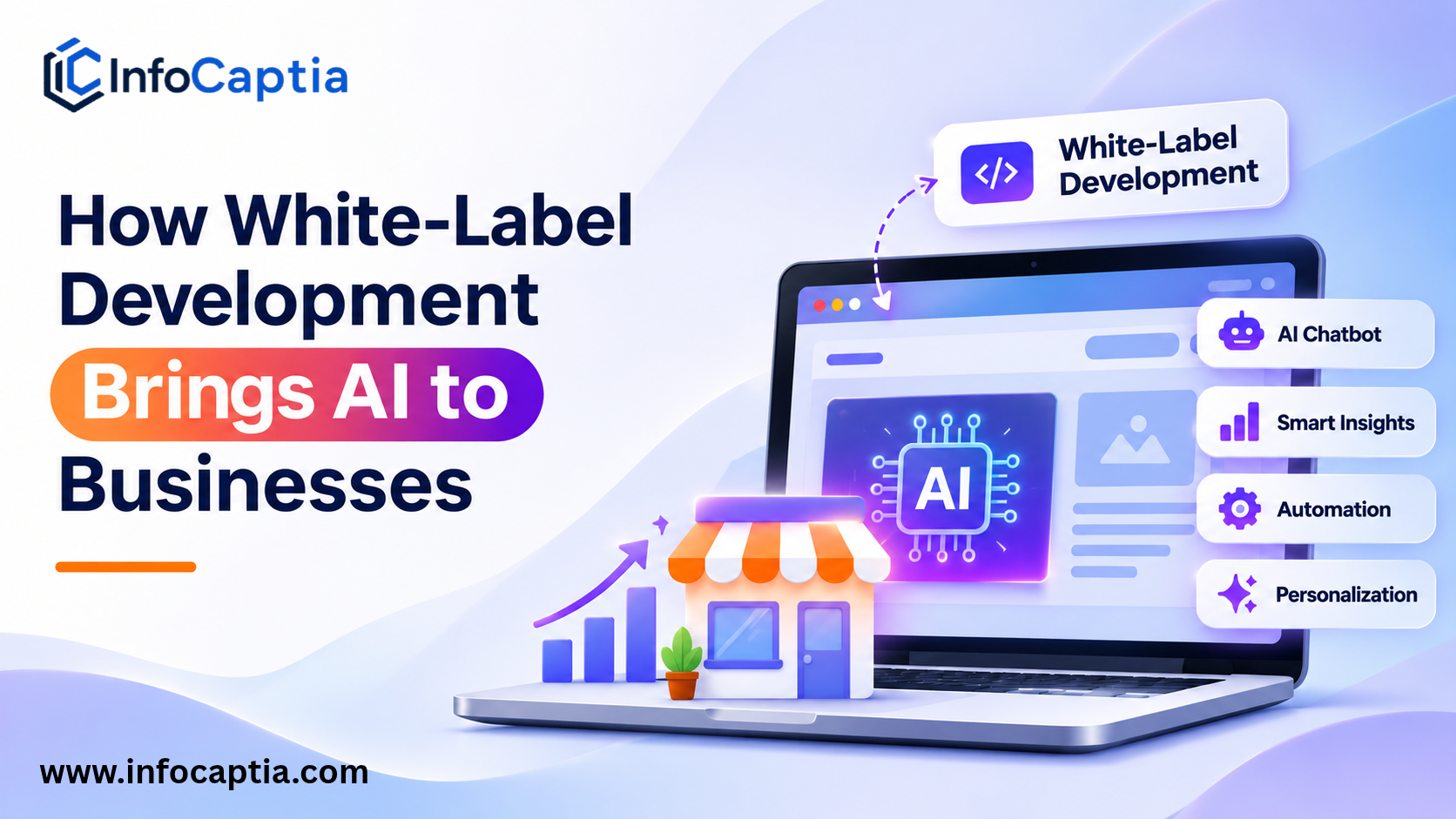
Some of the most popular AI website features being delivered this way include:
- AI chatbots for websites. Trained on a business's own FAQs, pricing and policies, they handle routine questions around the clock and pass complex ones to a human just like DBTalker.
- Smart site search. Instead of matching exact keywords, it understands what a visitor means. Someone typing "something warm for a rainy hike" can still land on the right jacket.
- Product and content recommendations. The same logic that big marketplaces use, scaled down to a store with 200 products.
- Automated lead capture and booking. Forms that qualify enquiries, schedule calls and sync with a CRM without anyone copying details by hand.
- Content assistance. Drafting product descriptions, summarising long pages or translating content for new markets.
Because the white-label provider reuses and refines these building blocks across many projects, the cost per client drops sharply. A feature that might cost thousands to build from scratch can become a manageable monthly or one-off fee.
A Realistic Example
Take a hypothetical dental clinic with two locations. The owner wants fewer missed calls and a website that actually brings in appointments. She asks her marketing agency, who has no AI developers on staff.
The agency partners with a white-label development company. Within a few weeks, the clinic's site has a chatbot that answers questions about treatments and opening hours, an appointment form that checks availability, and an automated follow-up message for people who start booking but don't finish.
The owner sees one invoice from the agency she's worked with for years. The agency adds a new service line. The development team does what it does best. Everyone gains, and the clinic competes with much larger chains.
Why Agencies and Freelancers Love This Model Too
It isn't only small businesses that benefit. For agencies and freelancers, white label web development company solves a very practical problem: demand for AI work is rising faster than most teams can hire.
Instead of turning down projects or stretching a small team too thin, they can say yes. They keep the client relationship, control pricing and grow revenue without the overhead of recruiting, training and managing extra developers. It's also a safer way to experiment with new offerings before committing to building them in-house.
What to Check Before Choosing a Partner
Not every provider is equal, and the label on the box doesn't guarantee quality. Before signing up with anyone offering web development outsourcing, ask a few straightforward questions:
- Can I see real work? Look for live examples and, ideally, references from other agencies.
- How do they handle data and privacy? AI features often touch customer information. Ask about GDPR, data storage and how chatbot conversations are protected.
- Who owns the code and the content? This should be spelled out clearly in the contract.
- How do they communicate? Clear timelines, a single point of contact and honest updates matter more than flashy sales decks.
- What happens after launch? AI tools need monitoring, updates and tuning. Make sure support and maintenance are part of the deal.
- Do they use NDAs? A genuine white-label partner should be comfortable staying invisible.
Mistakes Worth Avoiding
A few pitfalls come up again and again. The first is adding AI for the sake of it. A chatbot that gives vague or wrong answers does more harm than no chatbot at all, so start with one clear problem, such as slow response times or missed bookings, and solve that well.
The second is skipping testing with real customers. What looks clever in a demo can fall flat when actual visitors ask unexpected questions. The third is choosing purely on price. The cheapest option often becomes the most expensive once you factor in rework.
Finally, don't forget the human side. AI should take repetitive work off your plate, not make customers feel they can't reach a real person.
Final thoughts
AI no longer belongs only to companies with deep pockets and large tech teams. Through Infocaptia an white label web development service, small and growing businesses can offer the kind of fast, helpful and personalised online experience that customers now take for granted, without building an engineering department from scratch.
If you run a business, start by asking your web or marketing partner what AI-ready options they can offer. If you run an agency, consider whether a white-label partnership could help you say yes to the projects you're currently passing on. Either way, the barrier to entry is lower than it has ever been, and the time to take a first step is now.